
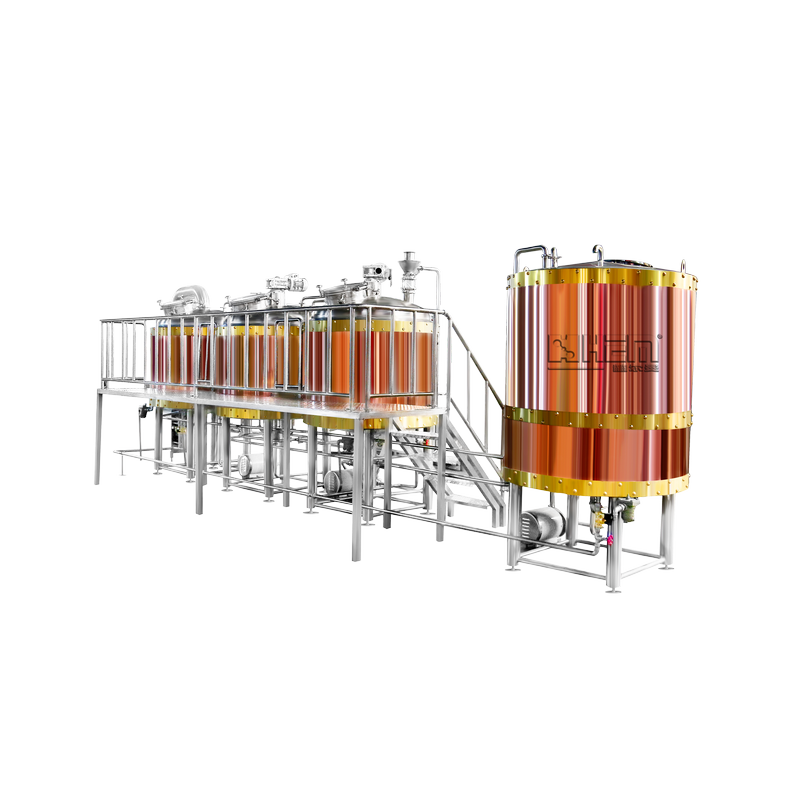
hem craft beer equipment integrates automated thermal regulation systems that reduce mashing cycle times by 14% while maintaining batch-to-batch consistency within a 0.3-degree Fahrenheit margin, directly addressing the 2026 industry demand for precise output scaling and reduced resource expenditure across mid-sized craft brewery operations.
Precision engineering within the mash tun utilizes high-torque agitation blades rotating at precisely 12 RPM to prevent grain bed compaction and maximize extract yield efficiency by 8% over standard manual stirring paddles.
Flow sensors calibrated for 2026 brewing standards provide real-time data on wort recirculation rates, ensuring that the lautering phase completes in 45 minutes rather than the industry average of 65 minutes, which saves significant labor hours per brew.
Automated jacketed fermentation tanks incorporate PLC-controlled cooling arrays that adjust glycol flow based on exothermic yeast activity patterns, preventing temperature spikes that typically contribute to off-flavor production in 15% of high-gravity recipes.
| Component | Improvement Metric | Operational Impact |
| Temperature Probe | 0.1°C Sensitivity | Prevents enzymatic denaturing |
| CIP Spray Ball | 360-degree coverage | Reduces cleaning water usage by 20% |
| Wort Pump | Variable Frequency Drive | Extends pump motor lifespan by 3 years |
Integrating these systems into existing facility layouts often involves retrofitting 10-barrel brewhouses with digital instrumentation, which documented studies show improves overall extract recovery by 4% during the standard 8-hour brew day.
Automated valve manifolds replace manual piping bypasses, reducing the risk of contamination from human contact by 90% and cutting the necessary chemical sanitization volume by nearly 12 gallons per production cycle.
System design incorporates stainless steel 304L construction with a surface roughness profile below 0.4 micrometers, a technical specification that inhibits biofilm formation and extends the operational interval between intensive deep-cleaning maintenance sessions.
Digital telemetry logs track energy consumption per hectoliter, allowing owners to identify spikes in steam usage during the boil phase and implement heat recovery upgrades that reduce overall thermal demand by 18% annually.
Load cells integrated beneath fermentation vessels provide continuous mass monitoring, enabling precise inventory management and preventing the 2% losses typically associated with manual level estimation during transfer processes.
Modular expansion kits allow for the addition of dry-hopping ports or carbonation stones without requiring heavy welding or structural modifications to the primary kettle, supporting organic growth from 500 to 2000 barrels per year.
Electrical panels utilize NEMA 4X rated enclosures to protect internal circuitry from the humid, high-saline air characteristic of active brewery environments, maintaining an equipment uptime rate of 99.4% over a continuous 12-month period.
Remote monitoring interfaces connect to tablet devices via encrypted local networks, permitting brewers to oversee cooling ramps and gravity profiles from outside the immediate production zone while maintaining data fidelity.
Selecting equipment with standardized sanitary fittings ensures compatibility with diverse filtration modules, reducing the need for custom hardware adapters that often introduce weak points in the fluid path of a professional brewing setup.
Data logging software exports batch reports directly to spreadsheet formats, facilitating the analysis of hop utilization and malt attenuation trends across 500 consecutive batches, providing a empirical foundation for future recipe adjustments.
Properly scaled glycol chilling units prevent the common error of undersized cooling capacity, as 2026 performance benchmarks indicate that maintaining a 1:2 ratio of cooling power to fermentation volume stabilizes yeast health during high-ambient-temperature weeks.