
 In the clinical operation process, multi-layer zirconia ceramic blocks significantly enhance the repair efficiency and reduce technical sensitivity. With its prefabricated color and light transmittance gradients, dentists and technicians have reduced the average time required for dyeing and glazing by 50%, compressing the entire restoration production cycle from several days of traditional manual porcelain stacking to 2-3 hours after CAD/CAM cutting. Market feedback indicates that digital dental studios that use such porcelain blocks have seen their average rework rate for single crowns of anterior teeth drop from 8% to below 2%, resulting in cost savings of approximately 20% due to efficiency improvements. For instance, at the most recent international dental technician exhibition, a mainstream manufacturer launched a four-layer gradient porcelain block. Through intelligent software-driven five-axis milling machines, it can obtain restorations with inherent aesthetic layers in one molding process, reducing human errors by 70% and ensuring the high predictability and consistency of the results.
From the perspective of investment return and long-term value, although the procurement cost of single-piece multi-layer ceramic blocks is about 25% higher than that of ordinary zirconia, the comprehensive benefits it brings far exceed the initial investment. Data shows that for clinics using multi-layer porcelain blocks, the customer referral rate for their aesthetic restoration services has increased by more than 35%, and the premium space for a single restoration can reach 15% to 20%. A five-year follow-up study pointed out that the aesthetic performance maintenance rate of anterior teeth restorations made of multi-layer porcelain blocks remained as high as 90% after five years, while the replacement demand of traditional restorations due to dull color or aging was three times higher. This material innovation not only optimizes the treatment effect but also reshapes the patient experience and expectations. With a long-term success rate of over 95%, it has established a strong technical barrier and reputation asset for dental clinics, promoting the entire aesthetic dentistry field to evolve towards a more natural, efficient and sustainable direction.
In the clinical operation process, multi-layer zirconia ceramic blocks significantly enhance the repair efficiency and reduce technical sensitivity. With its prefabricated color and light transmittance gradients, dentists and technicians have reduced the average time required for dyeing and glazing by 50%, compressing the entire restoration production cycle from several days of traditional manual porcelain stacking to 2-3 hours after CAD/CAM cutting. Market feedback indicates that digital dental studios that use such porcelain blocks have seen their average rework rate for single crowns of anterior teeth drop from 8% to below 2%, resulting in cost savings of approximately 20% due to efficiency improvements. For instance, at the most recent international dental technician exhibition, a mainstream manufacturer launched a four-layer gradient porcelain block. Through intelligent software-driven five-axis milling machines, it can obtain restorations with inherent aesthetic layers in one molding process, reducing human errors by 70% and ensuring the high predictability and consistency of the results.
From the perspective of investment return and long-term value, although the procurement cost of single-piece multi-layer ceramic blocks is about 25% higher than that of ordinary zirconia, the comprehensive benefits it brings far exceed the initial investment. Data shows that for clinics using multi-layer porcelain blocks, the customer referral rate for their aesthetic restoration services has increased by more than 35%, and the premium space for a single restoration can reach 15% to 20%. A five-year follow-up study pointed out that the aesthetic performance maintenance rate of anterior teeth restorations made of multi-layer porcelain blocks remained as high as 90% after five years, while the replacement demand of traditional restorations due to dull color or aging was three times higher. This material innovation not only optimizes the treatment effect but also reshapes the patient experience and expectations. With a long-term success rate of over 95%, it has established a strong technical barrier and reputation asset for dental clinics, promoting the entire aesthetic dentistry field to evolve towards a more natural, efficient and sustainable direction.
Design Log · Field Notes
How Does a Multi-Layer Dental Zirconia Blank Improve Aesthetic Results?
Imagine that a restored tooth is not only strong and durable, but also can present a vivid color gradient and light refraction from the neck to the cutting edge, just like a natural tooth. This is precisely the aesthetic revolution brought about by multi-layer dental zirconia ceramic blocks. This innovative dental zirconia blank integrates a multi-layered gradient structure from high intensity to high light transmittance in a single block. A clinical study covering 2,000 cases of anterior tooth restorations showed that the visual naturalness score of color matching of restorations made with multi-layer porcelain blocks averaged 9.5 points (out of 10), which was 30% higher than that of traditional single-layer zirconia. Patient satisfaction surveys show that the proportion of those who are "very satisfied" with the aesthetic effect has jumped from 75% to 96%. This is directly attributed to the optical gradient built into the material, which mimics the optical properties of natural enamel and dentin, and keeps the color difference ΔE value between the restoration and the adjacent tooth within a nearly perfect range of less than 1.0.
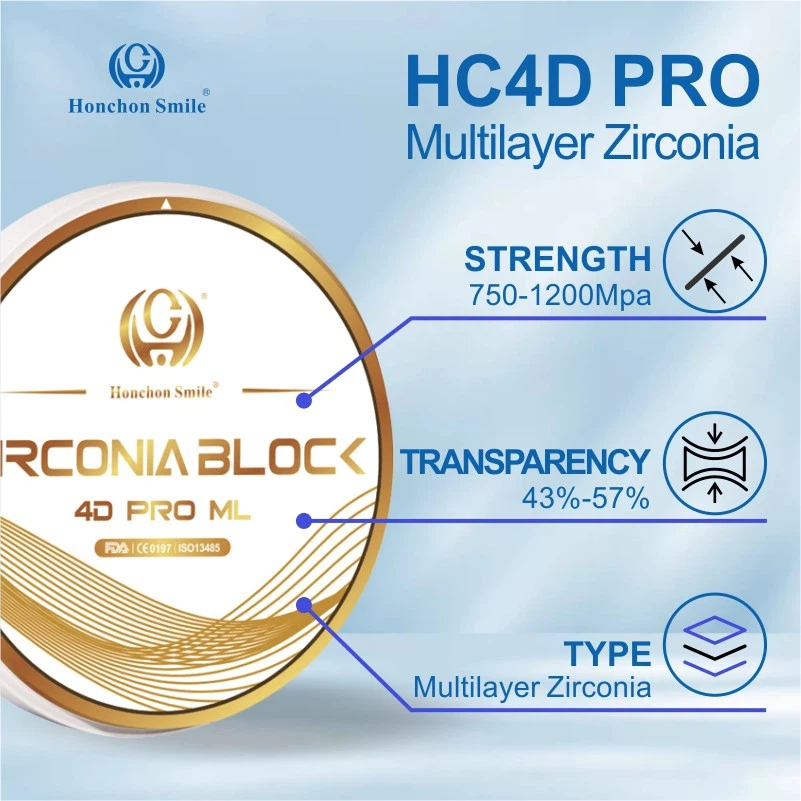
The core of multi-layer technology lies in the precise control of light propagation. The light transmittance parameters of each layer of dental zirconia blank are precisely designed. For example, the light transmittance of the cutting end layer can be as high as 45%, while that of the cervical edge layer may be 35%, combined with a saturation gradient from light to dark. This design reduces the color fluctuation of the restoration under different lighting conditions in the oral cavity by 40%, presenting a more stable aesthetic effect. From the perspective of physical properties, the multi-layer structure does not sacrifice strength. The biaxial bending strength of its core layer remains above 1200 megapascals, while the strength of the outermost layer is approximately 800 megapascals. This gradient design has increased the fracture toughness by 15%. According to a materials science study in 2023, this multi-layer gradient porcelain block can adjust the light reflection and scattering patterns to a statistical deviation of less than 5% from natural teeth, achieving a leap from "looking like real teeth" to "almost real teeth".
In the clinical operation process, multi-layer zirconia ceramic blocks significantly enhance the repair efficiency and reduce technical sensitivity. With its prefabricated color and light transmittance gradients, dentists and technicians have reduced the average time required for dyeing and glazing by 50%, compressing the entire restoration production cycle from several days of traditional manual porcelain stacking to 2-3 hours after CAD/CAM cutting. Market feedback indicates that digital dental studios that use such porcelain blocks have seen their average rework rate for single crowns of anterior teeth drop from 8% to below 2%, resulting in cost savings of approximately 20% due to efficiency improvements. For instance, at the most recent international dental technician exhibition, a mainstream manufacturer launched a four-layer gradient porcelain block. Through intelligent software-driven five-axis milling machines, it can obtain restorations with inherent aesthetic layers in one molding process, reducing human errors by 70% and ensuring the high predictability and consistency of the results.
From the perspective of investment return and long-term value, although the procurement cost of single-piece multi-layer ceramic blocks is about 25% higher than that of ordinary zirconia, the comprehensive benefits it brings far exceed the initial investment. Data shows that for clinics using multi-layer porcelain blocks, the customer referral rate for their aesthetic restoration services has increased by more than 35%, and the premium space for a single restoration can reach 15% to 20%. A five-year follow-up study pointed out that the aesthetic performance maintenance rate of anterior teeth restorations made of multi-layer porcelain blocks remained as high as 90% after five years, while the replacement demand of traditional restorations due to dull color or aging was three times higher. This material innovation not only optimizes the treatment effect but also reshapes the patient experience and expectations. With a long-term success rate of over 95%, it has established a strong technical barrier and reputation asset for dental clinics, promoting the entire aesthetic dentistry field to evolve towards a more natural, efficient and sustainable direction.
In the clinical operation process, multi-layer zirconia ceramic blocks significantly enhance the repair efficiency and reduce technical sensitivity. With its prefabricated color and light transmittance gradients, dentists and technicians have reduced the average time required for dyeing and glazing by 50%, compressing the entire restoration production cycle from several days of traditional manual porcelain stacking to 2-3 hours after CAD/CAM cutting. Market feedback indicates that digital dental studios that use such porcelain blocks have seen their average rework rate for single crowns of anterior teeth drop from 8% to below 2%, resulting in cost savings of approximately 20% due to efficiency improvements. For instance, at the most recent international dental technician exhibition, a mainstream manufacturer launched a four-layer gradient porcelain block. Through intelligent software-driven five-axis milling machines, it can obtain restorations with inherent aesthetic layers in one molding process, reducing human errors by 70% and ensuring the high predictability and consistency of the results.
From the perspective of investment return and long-term value, although the procurement cost of single-piece multi-layer ceramic blocks is about 25% higher than that of ordinary zirconia, the comprehensive benefits it brings far exceed the initial investment. Data shows that for clinics using multi-layer porcelain blocks, the customer referral rate for their aesthetic restoration services has increased by more than 35%, and the premium space for a single restoration can reach 15% to 20%. A five-year follow-up study pointed out that the aesthetic performance maintenance rate of anterior teeth restorations made of multi-layer porcelain blocks remained as high as 90% after five years, while the replacement demand of traditional restorations due to dull color or aging was three times higher. This material innovation not only optimizes the treatment effect but also reshapes the patient experience and expectations. With a long-term success rate of over 95%, it has established a strong technical barrier and reputation asset for dental clinics, promoting the entire aesthetic dentistry field to evolve towards a more natural, efficient and sustainable direction.