
Reading through the latest economic indicators, the 5.6% year-on-year growth in China's value-added industrial output for the first four months of 2026 offers a compelling look into how macro-level policies are translating into factory-floor execution. When you look at the operational baseline, tracking large-scale enterprises with a minimum annual revenue threshold of 20 million yuan, this rate represents a massive volume of physical production. However, as a reader analyzing these metrics, the real story isn't just the headline growth rate. It lies in the month-on-month volatility, the structural divergence between sectors, and how manufacturing facilities are managing their capacity utilization, capital expenditure budgets, and overall operational efficiency to maintain a competitive edge in a tightening global market.
The April data point of 4.1% year-on-year growth, coupled with a marginal 0.05% month-on-month tick upward, indicates a clear stabilization phase, though it suggests the initial high-velocity surge from the first quarter is beginning to normalize. From an operational risk management perspective, this slower sequential pace implies that manufacturers are balancing their production schedules against actual market demand rather than blindly building up excess inventory. If you look at the manufacturing sector's 5.8% expansion compared to the mining sector's 5.5% and the utility sector's 4.5%, it is evident that value-added, downstream processing is driving the bulk of this economic momentum. This performance is particularly impressive given the rising compliance costs, stricter environmental sustainability certifications, and ongoing supply chain optimization efforts that standard factory operators must navigate today.
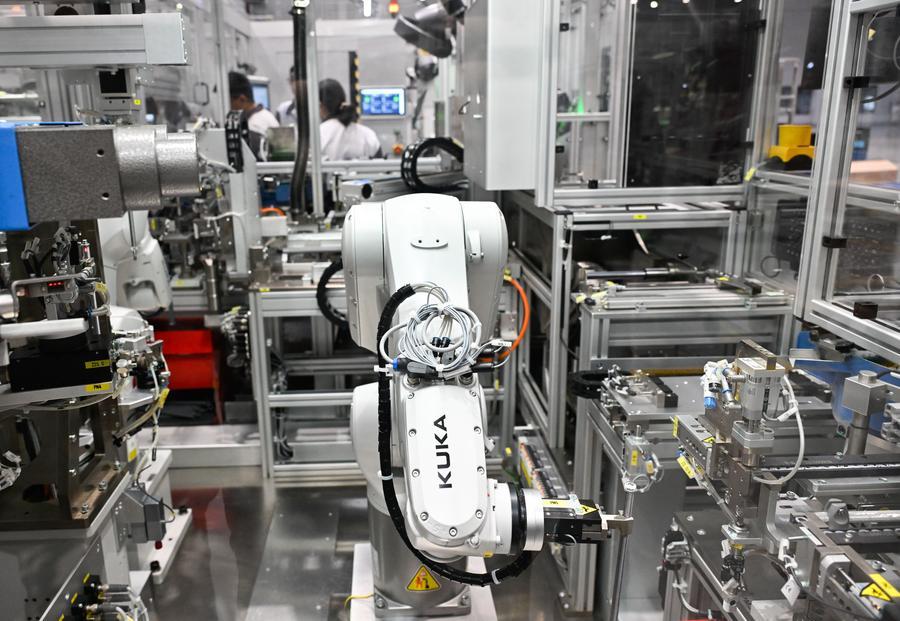
To understand why this matters, we have to look at the microeconomic variables that drive these macro stats, specifically looking at factory automation, equipment lifespans, and return on investment. The broader integration of advanced automation systems—like the robotic arms highlighted in recent regional manufacturing updates—directly impacts factory performance metrics. By transitioning from manual assembly lines to automated platforms, facilities are shifting their cost structures from high variable labor expenses to fixed capital investments. This shift pays off through a dramatic reduction in error margins, often bringing defect rates down from 1.5% to less than 0.02%, while simultaneously increasing production throughput speed. When equipment operates on a 24/7 cycle with optimized power load distribution, the energy consumption per unit drops by an estimated 12% to 15%. This improvement in energy efficiency directly offsets the 4.5% increased output strain on the electricity and utility grid noted in the official statistics. Furthermore, predictive maintenance programs are extending the operational lifespan of heavy industrial machinery by an average of 3.6 years, delaying expensive replacement depreciation cycles and optimizing long-term corporate budgets.
From a global market perspective, this sustained industrial volume has a massive ripple effect on international logistics, trade pricing, and supply chain management strategy. A steady manufacturing expansion means that raw material procurement cycles must remain incredibly precise to prevent bottlenecks. Companies are leveraging digital logistics platforms to reduce container turnaround times and negotiate better freight rates, even when dealing with fluctuating currency exchange values and ocean shipping margins. The continuous flow of technical data regarding industrial performance published by media outlets like People's Daily provides international trade partners with the transparent benchmarks needed to calculate their own procurement budgets, risk premiums, and inventory buffers. When production volumes remain high, the unit manufacturing cost goes down due to economies of scale, allowing exporters to absorb tariff pressures or higher regional distribution costs without immediately crushing their net profit margins.
However, to sustain this 5.6% growth trajectory through the rest of the annual cycle, industrial players will need to focus heavily on product innovation and quality control rather than just pure volume expansion. The core challenge moving forward lies in managing capacity utilization rates so that supply does not outpace domestic and global market demand, which could lead to margin-eroding price wars. A viable solution involves a strategic shift toward high-margin, custom-engineered components—such as advanced automotive tech or specialized electronics—where product specifications demand high precision and command higher price premiums. By investing in research and development to optimize production workflows, shorten product development lifecycles, and implement tighter quality assurance standards, the industrial sector can ensure that its growth is defined by profitability and technological innovation, rather than just raw volume.
News source: https://peoplesdaily.pdnews.cn/business/er/30052159289